

Volunteer
Share your dog's calm with people who need it
Therapy animal teams visit hospitals, nursing homes, schools, and college campuses to offer a few minutes of comfort. You can volunteer with your own animal, or you can help new teams get evaluated. Both matter, and we can help you get started.
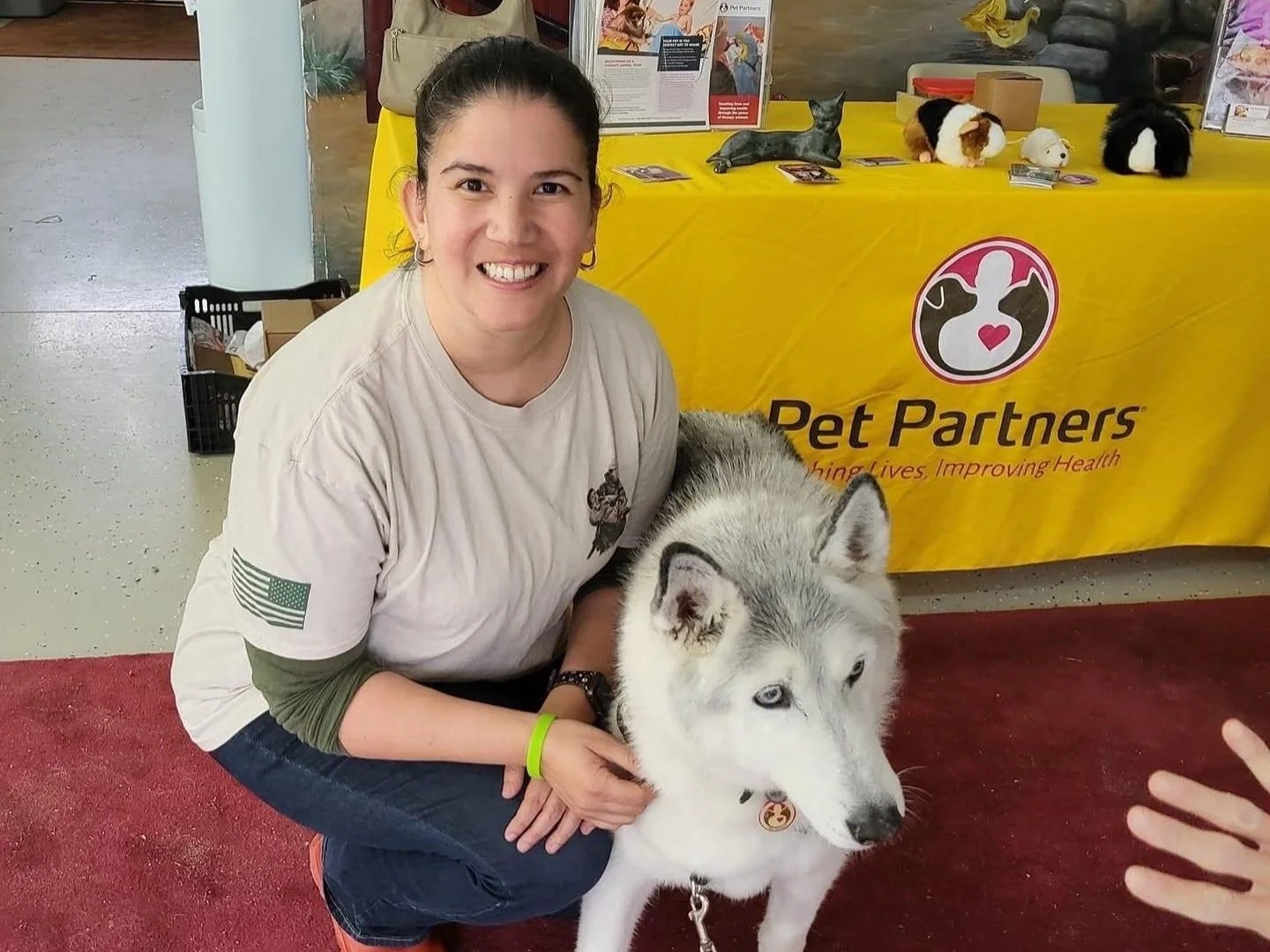
Maybe you've noticed it already. Your dog leans into the neighbor who has had a hard week. Strangers crouch down to say hello and walk away a little lighter.
If you've ever thought, "other people should get to feel this," therapy animal volunteering may be a good fit for the two of you. It's flexible, it's done on your schedule, and it asks something simple of your animal: to be themselves around people who could use the company.
Judith Liu, LCSW, is a volunteer team evaluator and workshop facilitator with Pet Partners, a national nonprofit that registers therapy animal teams. She began as a community volunteer alongside Ruby and Grogu, and she wants more teams out there doing this work. That takes two kinds of volunteers.
With your animal
Become a therapy dog team
You and your dog register together as a team and visit places in your community where you're invited. We'll walk you through the steps, and when you're ready Judith can come to you for an Alternate Evaluation.
See the stepsNo animal needed
Help evaluate new teams
Every evaluation needs a few extra people to make it feel like a real visit. If you like animals and have a free morning now and then, you can make it possible for a new team to get registered.
See how to helpVolunteer with your dog
From family pet to registered therapy animal team
Registration is through Pet Partners, and it's the handler and the animal who register together. The process is meant to set you both up for visits that feel safe and enjoyable, for you, your dog, and the people you meet.
Requirements and fees are set by Pet Partners and can change. Check their current steps before you begin.
-
Ask whether your dog would enjoy it
The best therapy dogs like meeting new people, settle quickly in new places, and recover easily from a surprise. If your dog would rather stay home, that's a fine answer too.
-
Take the handler course
Pet Partners' handler course teaches you how to read your animal, speak up for them, and lead a visit. You'll need to pass it before your evaluation date.
-
Get a health screening from your vet
Your veterinarian confirms that your dog is healthy, comfortable, and ready for this kind of work.
-
Complete your team evaluation
The evaluation is a practice visit. It looks at basic skills like sit, down, stay, come, leave it, and walking on a loose leash, and just as much at how you support your dog along the way.
-
Register and start visiting
Once your team is registered, you choose where and how often you visit. You can start small, with one short visit a month.
Alternate Evaluations
Alternate Evaluations: we come to you
Finding an evaluation date nearby can be the hardest part of getting registered. Pet Partners offers an Alternate Evaluation process for teams who can't find a local option, and Judith provides these on site.
Ask about an Alternate EvaluationHelp evaluate teams
An evaluation takes more than one person
Because an evaluation is a practice visit, it needs people to visit. Volunteers play those parts so Judith can watch how each team responds. You don't need a therapy animal or any experience. We'll show you what to do, and it's a friendly way to spend a morning.
More helpers means more evaluation dates, and more dates means more teams out visiting.
Sign up to help-
Play a part
Act as the people a team might meet on a visit: a friendly stranger, a small crowd in a hallway, someone using a walker or a wheelchair.
-
Bring a calm dog
One exercise checks how a team passes another dog politely. A steady, easygoing dog and their person make that exercise possible.
-
Lend a hand
Help set up the room, greet teams as they arrive, and keep the day moving so nervous handlers feel welcome.
-
Thinking about becoming an evaluator?
Most evaluators start out as registered handlers, and Pet Partners provides the training. Helping on evaluation day is a good way to see the role up close, and Judith is glad to talk it through with you.
The organization behind the teams
Who is Pet Partners?
Pet Partners, formerly the Delta Society, is a national nonprofit founded in 1977. It trains, evaluates, and registers volunteer therapy animal teams, and it supports those teams with education, liability coverage, and standards that put the animal's wellbeing first.
Dogs are the most common therapy animals, but they aren't the only ones. Pet Partners also registers cats, rabbits, guinea pigs, horses, birds, and several other species. Around here we like to say that no animal is too small to make a difference.
The Gentle Paw is an independent counseling practice. Judith volunteers with Pet Partners; registration requirements, fees, and decisions belong to Pet Partners.
Common questions
Before you reach out
Is a therapy animal the same as a service animal or an emotional support animal?
No. A therapy animal volunteers with their handler to comfort other people, in places where the team has been invited. A service animal is trained to do specific tasks for one person with a disability. An emotional support animal supports their own person at home. Therapy animals do not have public access rights. If you're looking for an ESA evaluation, that's a separate service we offer.
How do I know if my dog would be a good therapy dog?
Look for a dog who seeks out new people, settles in unfamiliar places, and shakes off a dropped tray or a rolling cart without much fuss. Solid basic manners matter, but so does choice. The best visits happen when your dog is choosing to engage and you know how to tell when they've had enough.
Does it have to be a dog?
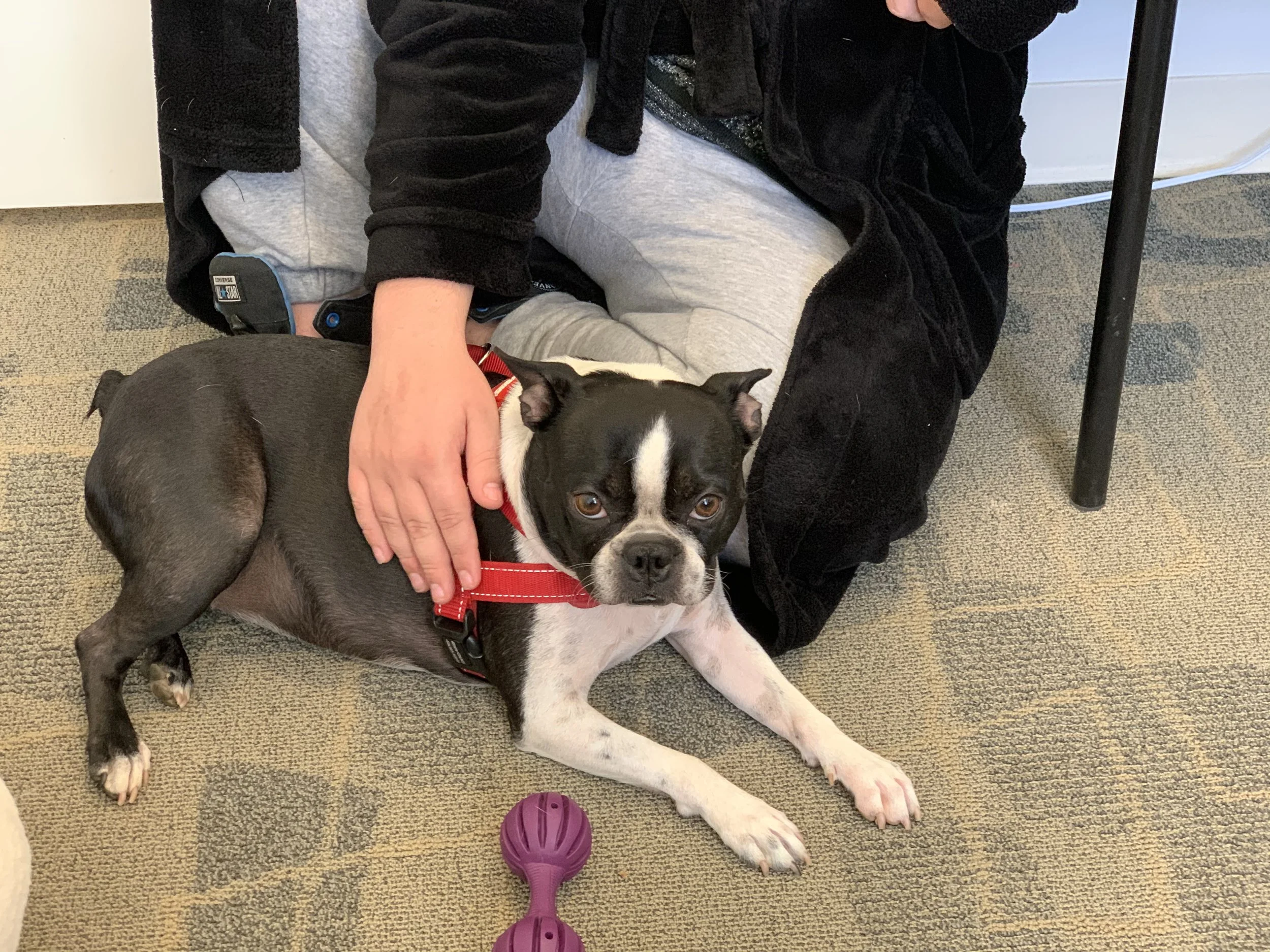
No. Pet Partners registers several species, and Judith's own therapy animals are Ruby, a Boston Terrier, and Grogu, a Sphynx cat. If you have a calm, people-loving cat, rabbit, or other animal, ask us.
Do I need my own animal to help on evaluation day?
No. Most evaluation-day volunteers come on their own. If you do have a calm dog who is relaxed around other dogs, tell us, because that's a role we're always trying to fill.
Where do evaluations take place?
Judith comes to you. She offers Pet Partners Alternate Evaluations one-to-one for individual teams and for groups at a facility such as a hospital, school, or campus. Evaluations are not held at our counseling office. Book a time to talk and we'll go over whether it fits your situation.
"I'm passionate about raising awareness of the impact therapy animals can have, and about growing a volunteer network that makes evaluations easier to find."Judith Liu, LCSW, volunteer team evaluator
Ready when you are
Whether you want to volunteer with your dog, help on evaluation day, or ask about an Alternate Evaluation for your team or your group, start with a short conversation. No pressure and no commitment.